
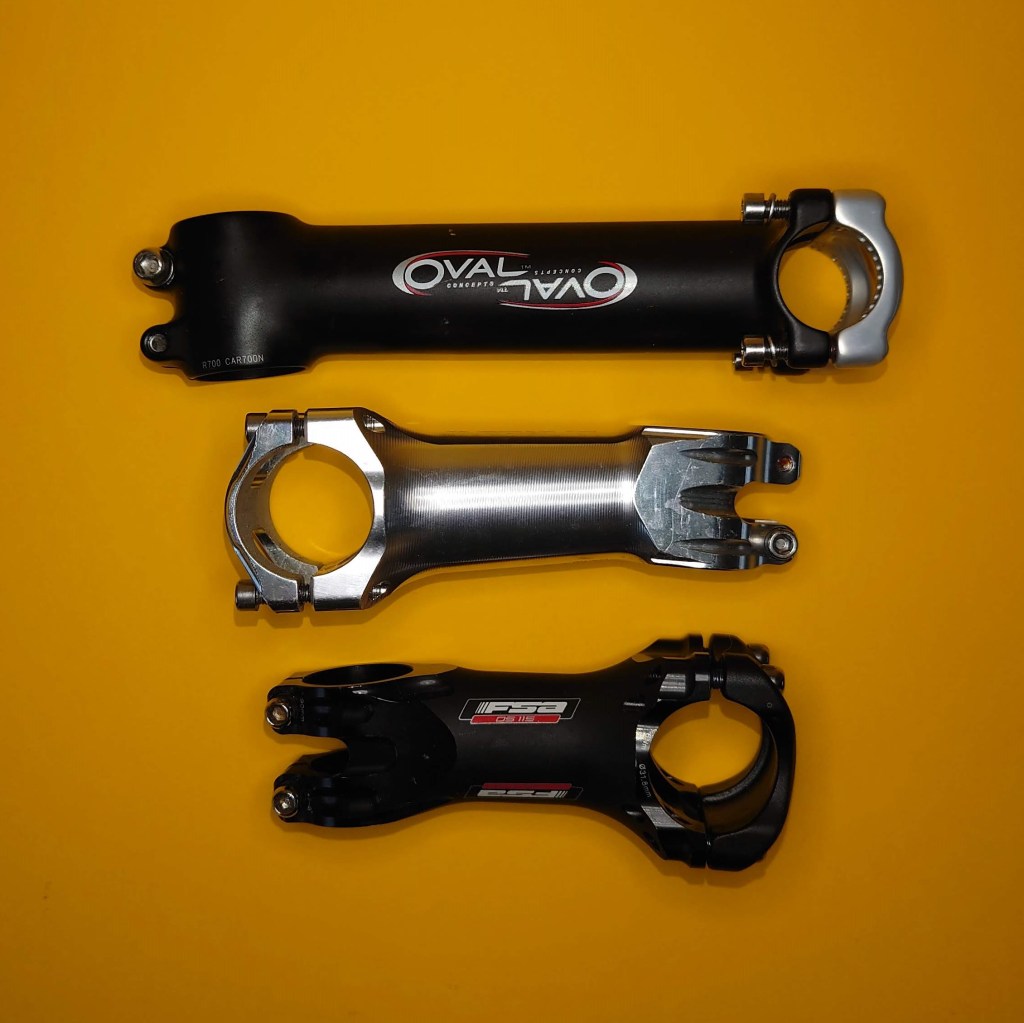
An appropriate stem length and angle allows positioning of the chosen handlebar style and setup at a functional reach and height. It is therefore usually one of the last elements to be finalised in a fit and may be adjusted several times throughout the process to accommodate for different handlebar reaches and other modifications during a session.
For modern cycling, where frame geometries are stock in the vast majority of cases, a wider range of stem lengths and angles than ever before are regularly utilized. This allows fitters access to the hardware they need to create the ideal position, even when frame Geometry may not be ‘perfect’ for that individual. Longer stems have become more prevalent as hand-built frames has fallen out of favour and how that compact handlebars have become the favoured choice of many riders, or the only choice for many using integrated handlebars.
Of course, there is a reasonable range in which stem lengths and stacks which retain the best handling characteristics of a given bike, all other things being equal. Too short and the steering of the bike can be twitchy, too long and it becomes sluggish. This is due not only to the distance from the steering axis, but a product of how it affects the rider’s weight distribution, particularly in relation to the front axle.
 AC Performance Bike Fit