

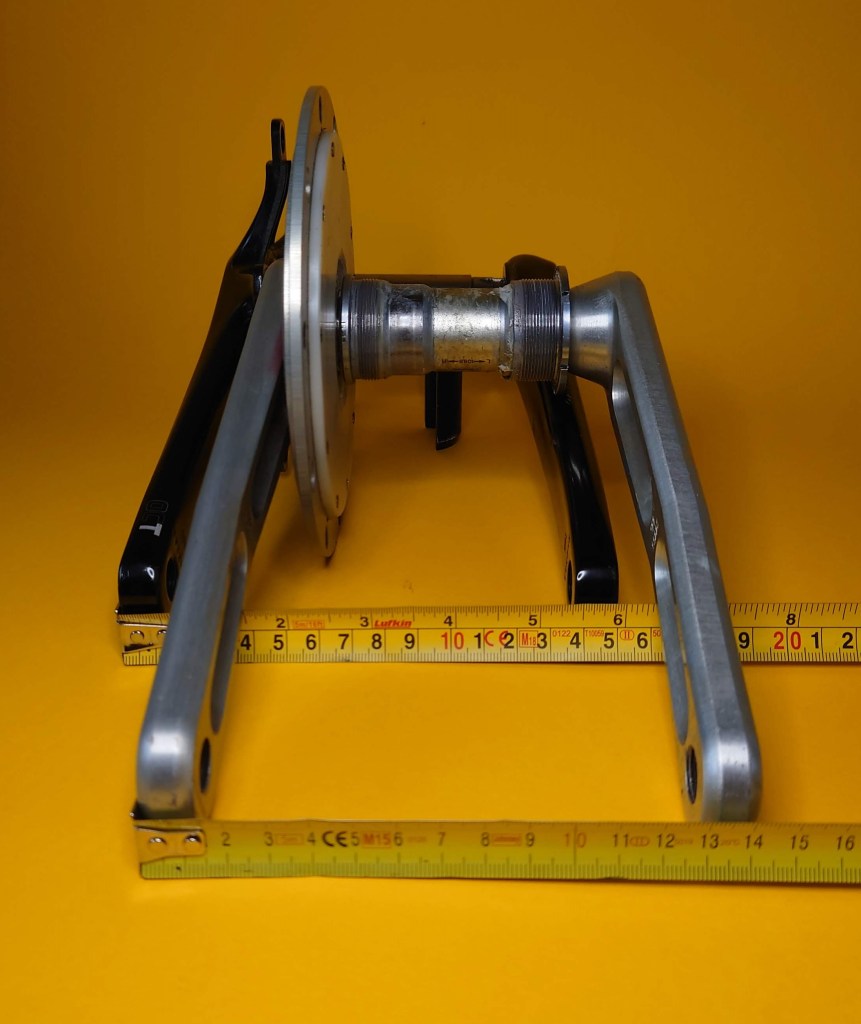
The width between the faces of the opposing crank arms provides a foundation on to which our stance width on the bike is created. These terms are occasionally used interchangeably, but while stance width measures the functioning distance between a rider’s feet, Q-Factor simply provides the measurement between where the pedals are attached.
It makes sense that because there is a large variance in the functional width of an individual, whether that be a product of pelvic width, knee function or something else, our stance width on the bike may need to be adjusted for us to function at our best and prevent injuries. But as standard, riders are forced to operate according to the width provided by their crank and their pedal choice, with just a small amount of cleat adjustment to help.
Stance width can be adjusted in many ways, such as pedal system choice, differing pedal axle lengths, axle spacers and washers as well as on the shoe with cleat inboard and outboard adjustment. But it is the Q-Factor of the crank in use which dictates how much of an intervention is required to achieve the desired stance width and in some cases, how far it can go.
The majority of road cranks use a Q-Factor of around 150mm. Many track cranks are narrower, around 141mm. A notable outlier is Campagnolo, who provide several cranks with a Q-Factor of 145.5mm, often overlooked by riders when matching fit dimensions across bikes with different groupsets.
While these differences are relatively small and simple to account for, where things become tricky is off-road bicycles. Many standard mountain bike cranks run a Q-Factor close to 170mm, with many fat bike cranks around 200mm. This creates a significant challenge and change for riders switching between disciplines and is why many professional mountain bike racers will increase the stance width of their road bikes to match that of their mountain bikes.
 AC Performance Bike Fit