
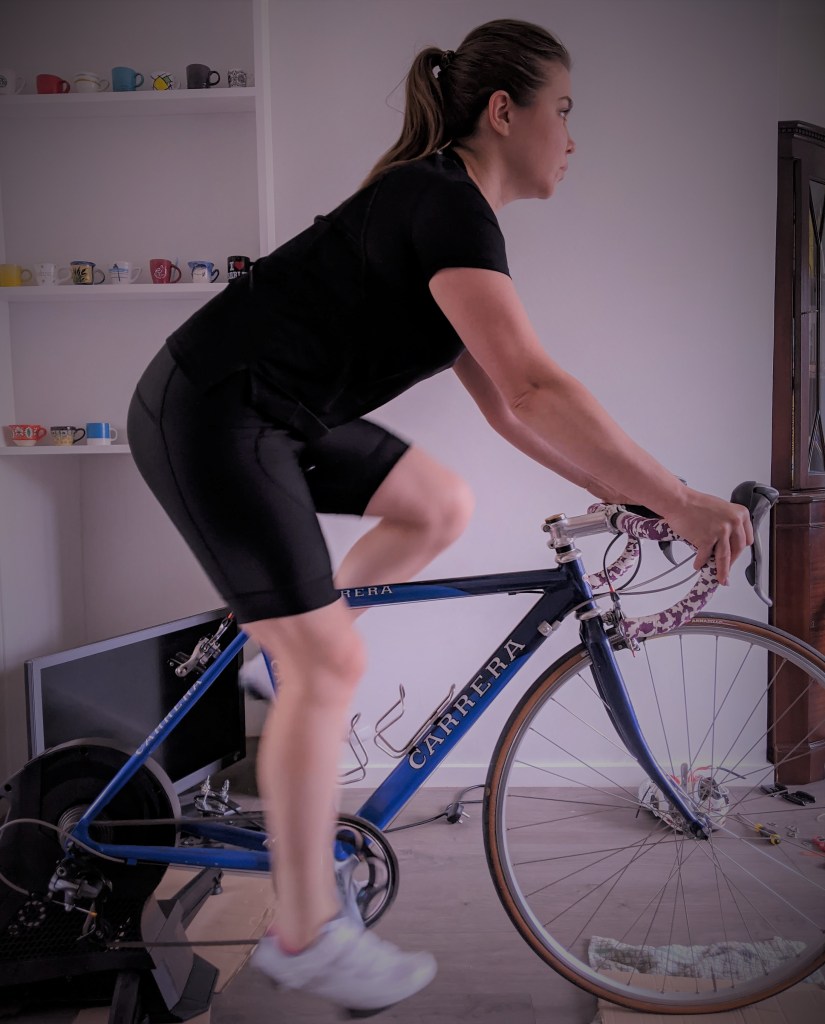
Many factors influence the functional saddle height range of an individual and like nearly every constituent part of an overall bike position, other elements are affected by it’s movement. Many riders can be seen using, to varying degrees of success, a saddle height which prevents or compromises their proper function on the bike and brings a plethora of issues to the table; knee pain, saddle discomfort, lower back pain, foot and muscle cramps and overactivation, the list goes on.
The fundamental parts to first consider with saddle height are, unsurprisingly, the parts which we actually have direct influence over: the saddle and the shoe/pedal. I won’t go in to any detail concerning each of these in this post, only to say that these three elements (one pelvis, two feet, in most cases) should be stable and comfortable.
The pelvis should be supported appropriately and ‘calm’ to the extent that it does not rock during the full pedal stroke.
The feet should be under control. This is very important to enable us to not only be comfortable and control the bike, but for optimum power and torque production. The feet are incredibly complex and dictate a lot of what happens above them (think walking barefoot on pebbles.) But many of us neglect them, particularly in cycling. It is a tough situation regularly presented to fitters of a hardened, lifelong cyclist, of the era of toeclips and straps, teamed with tight (read: too small) shoes, which has left them with rigid, squashed, disfunctional feet, low awareness of foot position and a heavily ingrained toe-pointing style. It’s usually a long and steady adaption period, but ultimately when searching for optimal muscle recruitment, it’s an adaptation worth undertaking.
But there are many obstacles in our way when we come to incorporate these fundamentals on to a bike and the results can be, interesting. Among the guilty parties preventing us from enjoying uninhibited and smooth pedalling are excessive handlebar reach or drop, inappropriate saddle setback or tilt and crank length. In combination as they often are, it’s not uncommon to see riders utilise excessive saddle height, simply because their body is in the way, or to find a rider happy with their saddle height at full extension, only to struggle with knee pain in flexion. Meanwhile, both are complaining of the same lower back pain!
It is generally assumed that knee extension is the main driver for establishing saddle height and that under/over extension of the knee is the main objective of selecting a rider’s saddle height. In practice, the nervous system gives a high priority to protection of the knee, so will create significant comprimises above and below the knee joint before it allows any change in peak extension angle. We can all think of the one rider on the group rider who’s hips drop side to side with every pedal stroke, whilst some of us may have even misguidedly developed a pedal stroke with a high instance of ankling. Many riders short change their ability to produce power by riding with a plantar flexed foot throughout the stroke. This is more often than not a combination of excessive saddle height, insufficient saddle setback and foot instability/lacking awareness, subjects I will talk about in future.
 AC Performance Bike Fit