

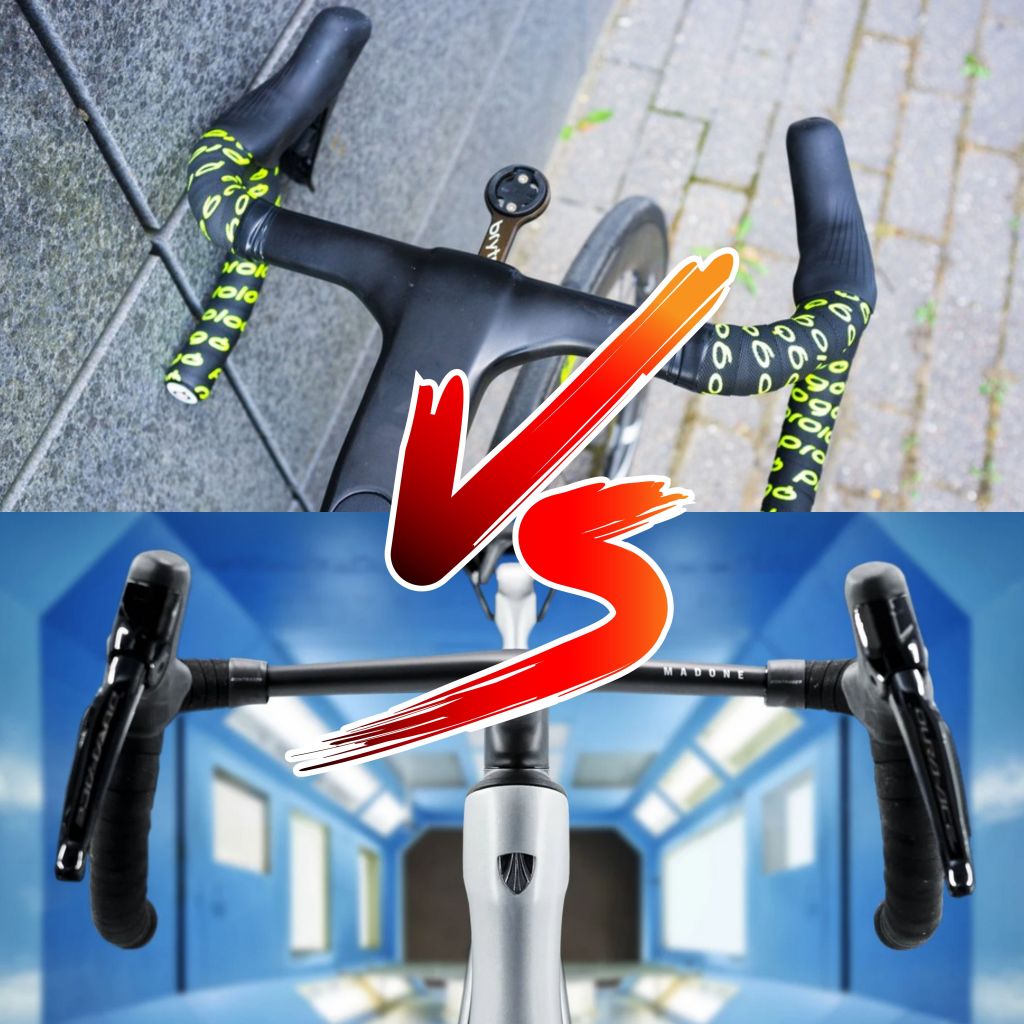
An increasing number of riders in the professional and amateur ranks are seeking easily accessible aerodynamic gains in their conventional road setups. Along with a simple shift to a narrower handlebar, we see many riders opt to modify their lever positioning to offer something towards a ‘mock TT’ position.
Most commonly seen adopted by breakaway specialists, we can also now see this theme spread throughout the peloton, especially now that the bike manfacturers are on board and introducing a wider (sorry) range of flared handlebars. But which is best? Should you be breaking out the allen keys and pulling off your fresh bar tape immediately, or maybe considering a complete cockpit switch?
There are, without question, benefits to be had for many by from shifting to a narrower hood position. Most riders (though not all) see an improvement in aerodynamics and with some time to accustomise also report improved comfort.
Each method has it’s benefits and it’s drawbacks. The simplest method of simply turning one’s levers in while retaining a ‘straight’ handlebar (the same width at the tops as in the drops) is virtually free and allows riders to experiment with the comprimise between comfort while in their upright position, trading off against the tucked position. The advantage here is that the ‘shoulder’ of the bar remains and can be used as a significant forearm support and that the rider can maintain their original preferred width elsewhere on the bar. The biggest drawback to this approach is braking. The further inward the lever is turned on an otherwise vertical bar, the more awkward the brake lever origin and path when pulled becomes.
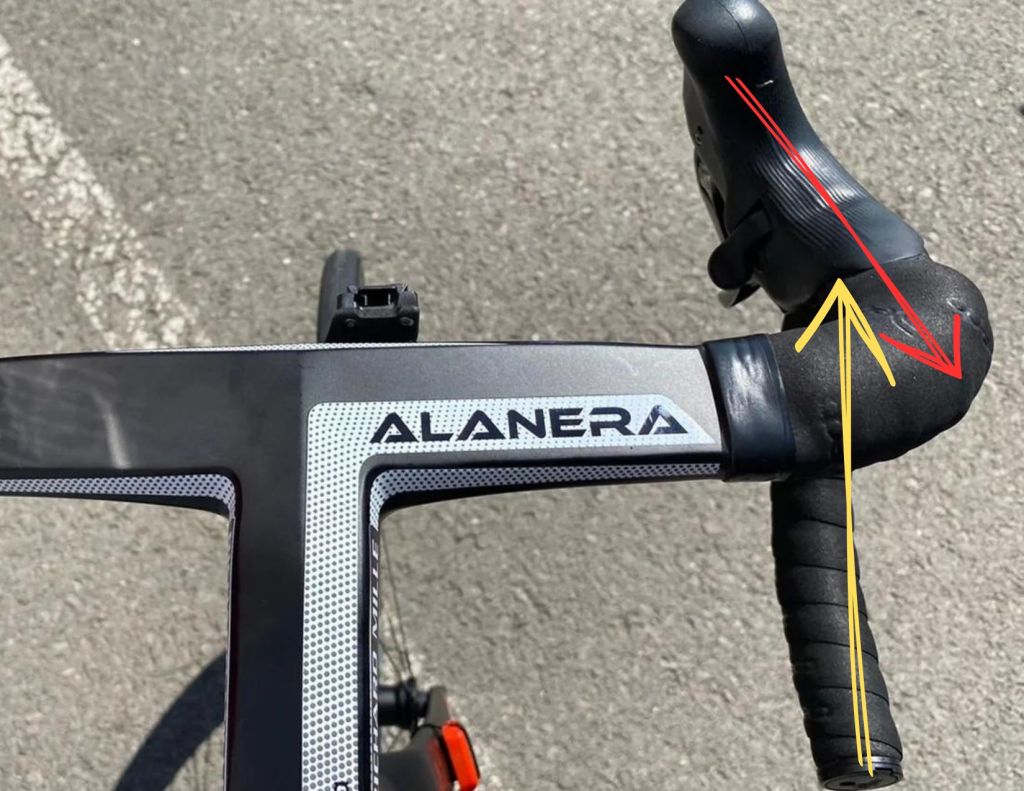
By comparison, using a flared bar provides a similar narrow stance for the levers, but allow for the brake lever to track more naturally to maintain control for the rider without the need to flare their elbows or cock their wrists, both undesirable when descending at high speed.
Randonneur style handlebars have been popular for decades amongst long-distance riders and have long been adopted most notably by riders like Jan-Willem Van Schip. Their relatively large flare allows for a very narrows tuck, but maintains a wide drop for moments when more leverage is required.
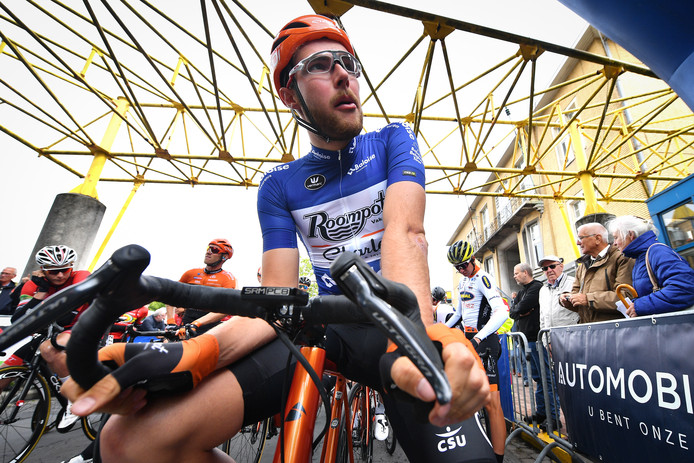
More recently we have seen bars like those from Enve adopt a similar, albeit it more subtle approach. The SES Aero bar has been hugely popular amongst criterium riders for some time and since gained a following in the Grand Tour ranks, most recently seen under many riders of the UAE team amongst others.

So if the benefits are so great, why do we not see this universally adopted throughout the professional ranks?
Firstly, there are still some restrictions for some riders with sponsorship and therefore the equipment that they are ‘allowed’ to use. Many manufacturers simply don’t provide flared bar options and leave riders forced to make the best adjustments possible with what they have. This has been a problem for many years, particularly with integrated cockpit options, with riders forced to use wider bars than they’d like or settle for a shorter stem length. With professional teams accounting for a fraction of a manufacturer’s sales, it makes sense that the production range would be centred around the average consumer and not the outliers.
Secondly, despite what many may believe, professional riders do not all have the most ‘dialled’ or marginally refined setups. Cycling has always been and is still a sport steeped in tradition and whilst many younger riders are quick to adopt new practices, there is still a large proportion who don’t like change! Though now less common than it once was, old saddles or shoes with the branding taped over were once rife in the pro ranks.
Lastly, this practice is not in the interest of every rider! Cycling has become increasingly specific, with riders focussing heavily on their specialism, whether it’s sprinters, testers, breakaway artists, classic rouleurs or climbers, each has their own priorities. For the GC rider, who may spend the majority of their time hidden from the wind, or the climbers who live for the steepest gradients, the leverage, balance and slow speed control arguably gained with a wider bar trumps the aero gains of the narrower. Whilst some have made the switch and adapted very well, we still see many of the more ‘elastic’ riders (think Alberto Contador) who prefer to maintain their conventional stance.

As always, the answer is that the decision is individual. I believe that many riders can take advantage of the selection of flared handlebars available in a variety of profiles. There is definitely some time to adapt required, before mentioning that any time you narrow the width between a rider’s hands, it has the effect of slightly reducing the reach, all other things being equal.
For riders who climb alot on the hoods, out of the saddle, the drawbacks can outweight the benefits. A small amount of riders find that further reduction of their handlebar width can cause some excess strain on the neck or shoulder regions. Some more muscular riders find a narrower position unsustainable for long durations. Track Sprinters don’t have to stay in position long!
The practice of turning levers aggressively inwards is not something which I encourage or see the need for when working with riders. I regularly use some degree of inward lever angle with clients, but angles approaching 40 degrees which I’ve witnessed recently are totally unnecessary and can even be dangerous in some situations.
All of this discussion is on the basis that a rider is using an appropriate width handlebar in the first place. I say appropriate and not ‘correct,’ because I’m of the belief that there is no “right” or “wrong,” but only what is suitable for you and your discipline. Of the riders who’s handlebars I have changed over the last decade, I’d estimate a roughly 4:1 ratio of athletes I’ve moved to a narrower bar, versus those I’ve implemented a wider one. If you’re reading this, it’s unlikely that you’re restricted by handlebar sponsorship, so there is very little reason not to start with an appropriate bar width!
 AC Performance Bike Fit